Platform Overview
How EyeGnostics Works
EyeGnostics operates through a Multimodal, Multilingual Diagnostic Loop, synthesizing visual data, structured clinical inputs, and patient history into a unified clinical assessment accessible through both structured workflows and conversational interaction.
Agentic Intelligence Layer
A central Orchestrator Agent coordinates four specialized clinical agents:
- Vision Agent
- Analyzes anterior segment and retinal images
- Detects clinically relevant abnormalities (corneal pathology, cataracts, retinal hemorrhages, optic disc changes)
- Performs objective refraction analysis using LiDAR-assisted measurements
- Produces language-independent clinical findings
- Clinical Intake Agent (Multilingual)
- Conducts structured symptom and sign intake in 40+ patient languages
- Adapts phrasing to cultural and regional expressions of illness
- Translates free-text responses into standardized clinical ontologies
- Manages accommodation control protocols for refraction testing
- Synthesis Agent
- Integrates visual findings and clinical inputs
- Generates ranked differential diagnoses
- Cross-references global and regional guidelines using Retrieval-Augmented Generation (RAG)
- Validates measurement consistency across multiple data sources
- Outputs clear reasoning, urgency flags, and recommendations in the clinician’s preferred language
- Copilot Agent (Conversational Interface)
- Serves as the natural language gateway to all specialist agents
- Enables voice and text interaction during clinical workflows
- Provides real-time clinical reasoning assistance and educational guidance
- Generates documentation, referral letters, and case notes in multiple languages
- Maintains full audit trail of all interactions for regulatory compliance
┌─────────────────────────────────────────┐
│ EyeGnostics Copilot (Interface) │
│ “Explain this finding in Spanish” │
└──────────────┬──────────────────────────┘
│
┌──────────────▼──────────────────────────┐
│ Orchestrator Agent (Core) │
│ Routes queries to specialist agents │
└──────────────┬──────────────────────────┘
│
┌──────────┼──────────┼──────────┐
▼ ▼ ▼ ▼
┌────────┐ ┌──────┐ ┌──────────┐ ┌────────┐
│ Vision │ │Intake│ │Synthesis │ │Copilot │
│ Agent │ │Agent │ │ Agent │ │ Agent │
└────────┘ └──────┘ └──────────┘ └────────┘
Mobile Interface — The Clinical Tool
EyeGnostics is designed for real-world clinical environments with three interaction modalities:
Intelligent Image Capture
Computer-vision-assisted guidance helps ensure usable diagnostic images under variable lighting and equipment conditions. LiDAR integration enables precision measurements for pupillary distance and vertex distance calculations.
Multilingual Symptom & Sign Matrix
Fast clinician input combined with patient-friendly guided intake in native languages. Voice-activated copilot allows hands-free data entry during examinations.
Dual-Language Clinical Documentation
Automatically generates clinical notes in both the local language and English—supporting audits, referrals, training, and cross-border collaboration. Copilot can generate specialized documents on demand (referral letters, patient education materials, case summaries).
Conversational Clinical Assistant
The EyeGnostics Copilot provides:
- Real-time guidance: Ask clinical questions during examinations via voice or text
- Educational support: Step-by-step explanations of differential diagnoses for students
- Documentation automation: Generate referral letters, prescriptions, and case notes through natural language commands
- Multilingual flexibility: Seamlessly switch between clinician working language and patient native language
- Offline capability: Degraded mode using on-device models for basic queries in low-connectivity environments
Agentic Refraction Protocol (Prescription-Grade Vision Testing)
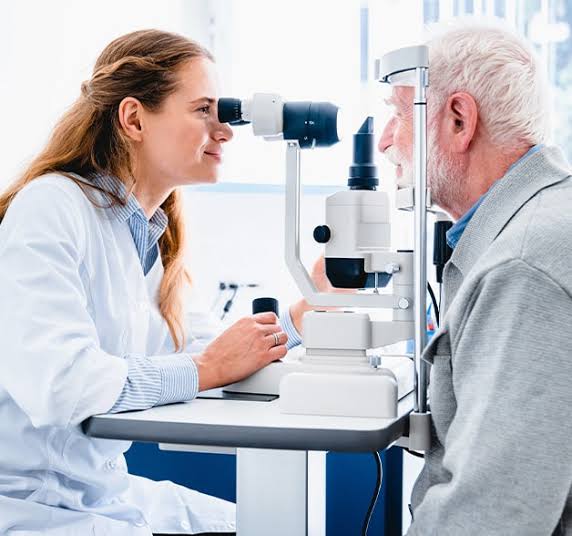
EyeGnostics implements a dual-validation refraction system that combines objective measurements with subjective refinement:
Phase 1: Objective Measurement
- LiDAR-Assisted Distance Calibration: Uses iPhone TrueDepth camera for sub-millimeter accuracy
- Accommodation Control: Implements fogging technique through guided visual stimuli
- Corneal Reflection Analysis: Vision Agent analyzes eye structure to predict refractive error
Phase 2: Subjective Refinement
- Voice-Guided Testing: Copilot conducts refraction test in patient’s native language
- Consistency Validation: Synthesis Agent flags inconsistent responses indicating fatigue or confusion
- Adaptive Protocol: Adjusts testing sequence based on patient’s responses and confidence levels
Phase 3: Prescription Generation
- Pupillary Distance (PD): Automated measurement using AR face mapping
- Vertex Distance: Calculates adjustment based on expected frame positioning
- Final Validation: Cross-checks measurements against population norms and flags outliers for review
Accuracy Target: ±0.25D for sphere and cylinder (surpassing current ±0.50D industry standard)
Why Multilingual Synthetic Intelligence Matters
EyeGnostics does not simply translate medical outputs. It simulates expert clinical judgment across linguistic and cultural contexts, enabling:

Clinical prioritization under uncertainty
Copilot helps clinicians navigate ambiguous cases through guided reasoning
Constraint-aware reasoning
E.g., poor image quality combined with severe symptoms → urgent referral
Bias mitigation through diverse datasets
Training on global clinical patterns, not just Western populations
Cultural interpretation of symptom descriptions
Understanding regional expressions of illness (e.g., “eye is hot” vs. “burning sensation”)
Consistent triage of sight-threatening conditions across settings
Standardized urgency protocols adapted to local resource availability
The Copilot enhances this by providing a natural-language interface that adapts to both the clinician’s expertise level and the patient’s linguistic context—making sophisticated AI accessible to users with varying levels of technical and medical training.